When Your Teen Starts Shining… and a Friendship Starts Fading

The subtle friendship shift no one talks about...

by Nancy Reynolds

This Post: When Your Teen Starts Shining… and a Friendship Starts Fading

Written By: Nancy Reynolds


There’s a kind of shift that happens in teenage friendships that a lot of parents don’t hear about or see coming, until their own child faces it.

It’s happened with my own kids more times than I can count. Not only did it baffle and hurt my kids, but it baffled and hurt me–because we all know we feel everything our kids feel. 

Case in Point: 

My 16-year-old son spent weeks working on an application for a summer internship he really wanted. It wasn’t just “a good opportunity” —it was his kind of opportunity. The kind that actually lined up with what he was considering as a major in college–aerospace engineering.

The cool part is that this internship would give him a real understanding of the field– you know, the kind of hands-on experience, foundation, and insight that would help him decide if he really did want to study aerospace engineering in college. 

After waiting for what seemed like forever to hear back, he received word: He got the internship! You bet he was excited, but he stayed humble. He wasn’t loud or showy. He was just quietly proud of himself for accomplishing something that mattered to him. 

And then I watched him reach for his phone to share the news with a friend… 

I could see it in my son’s eyes and demeanor. His friend wasn’t mean, just flat. Short. Almost distracted. Like it didn’t really land with him and it wasn’t really that big of a deal. But… to my son it was a big deal. I immediately saw my son’s enthusiasm wane and his shoulders drop. His friend’s lukewarm reaction hit him hard.


When Your Teen Starts Shining… and a Friendship Starts Fading
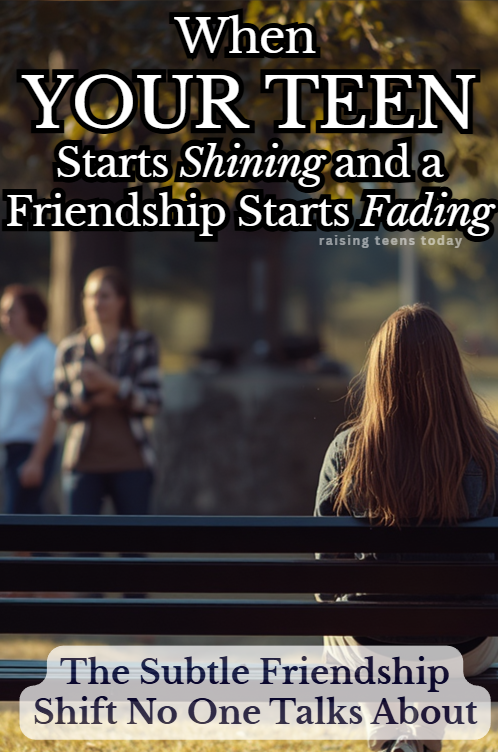
 

Your teen starts doing better…

Maybe it’s academically. Maybe it’s with their sport or hobby. Maybe socially. Maybe they won an award, landed an internship, or got the lead in the school play. Maybe they finally start feeling confident about something they worked hard for. They’re included more. Noticed more. Things are finally falling into place for them.

And then something unexpected happens.

A friend they’ve had for years suddenly starts to grow cold. Not dramatically. Not with a big fight. Just quietly. Just a slow drifting away that your teen can’t explain. 

Without warning, there’s:

Less texting.

Less calling. 

They show less excitement and interest in your teen’s life.

And there’s less of that easy back-and-forth they used to have.

And your teen notices. They feel it, and it hurts! And they can’t help but wonder: What happened? 

Did I do something wrong?
Am I being annoying?
Should I have kept my good news to myself?

This is where so many teens start shrinking themselves without even realizing it. But here’s what’s actually going on…

In teen friendships, when someone suddenly gets quiet or distant after their friend starts shining, it’s usually not one simple thing. More often, it’s a mix of feelings teens don’t fully understand yet.

They’re Feeling Insecure

When a teen starts seeing their friend succeeding or doing well, it can bring up quiet doubts about themselves. Not because they don’t like their friend and not because they don’t want them to succeed, but because it brings to light what they feel unsure about in their own life.

Perhaps, without even realizing it, they might offer up a response to good news that is less than enthusiastic.

Your teen landed a great job: “Good for you… happy for ya.” 

Your teen scored the winning goal at Friday night’s football game: “Cool. Yeah… it was a good game.”

Just remember, insecurity can creep up at any time, especially when you’re dealing with teenagers who are still “becoming” and who may not have a clear plan of where they’re going. 

They’re Comparing Themselves

Let’s face it, teen friendships come with a lot of comparison—who’s doing what, who’s getting noticed, who’s moving ahead, who’s cooler, more athletic, or more popular. So when one friend starts to stand out, it can shift how the other sees themselves.

Not because your teen did anything wrong. And not because the friend is a bad kid. But because it can quietly stir something in the other person… something they don’t really know how to name yet. Similar to insecurity, your teen’s “win” could be something their friend is still waiting for in their own life. And most teens don’t have the words for that kind of moment.

You won’t hear them say, “Wow… I’m really excited for you! I only wish I had that kind of success going on in my life.” 

So instead, it comes out in quieter ways.

Shorter replies.
A little distance. 
A little less excitement than your teen expected. 
Pulling back with no explanation why.
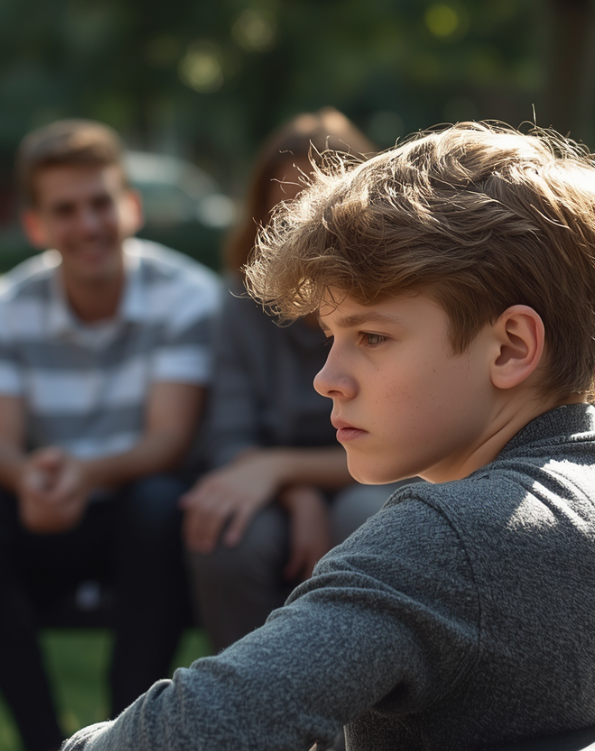
They’re Feeling Left Behind

They don’t usually say, “I’m happy for you, but I’m feeling behind.” Even if it’s not true, your teen’s friend can start to feel like they can’t keep up and they’re being left in the dust. Like somehow, their friend is moving forward, and they’re “stuck behind.” 

Rather than keeping the friendship alive and being honest about how they’re feeling, their feelings get the best of them, and they slowly create distance and align with other kids who are “more on their level.”

There’s Unspoken Competition and Jealousy

This is far more common in teen friendships than most people realize… especially with girls. 

A lot of girls don’t set out to compete, but somewhere along the way, a friend may start to compare, which triggers insecurity, which then triggers competition, which can then trigger jealousy.

Who’s getting invited. Who’s getting attention. Who’s excelling. Who’s getting more attention from boys. Who’s more popular. 

And when that happens, instead of saying “I feel insecure,” it can come out in other ways: distance, sarcasm, exclusion, a sudden change in tone or downright meanness.

So, what ends up happening is that a girl who actually cares about her friend might end up acting cold, sharper, nasty, jealous, or mean when she feels like she’s losing ground. 

A Maturity Gap (That May Fade in Time)

Some friendships work beautifully when their two lives are even and predictable. Same struggles. Same level on the social hierarchy. Same everything. But when growth isn’t even. When one friend starts moving forward—gaining confidence, more friends, more popularity, for instance–it can shift the dynamic in the friendship.

Some teens don’t yet know how to stay close to someone who is changing. So instead of maturely handling the shift, they quietly pull back. After all, it’s a whole lot easier to distance yourself than to figure out how to relate to a friend who is stepping into a different version of themselves. And remember: Not everyone matures at the same speed.

They Might Find it Hard to Be Happy for Your Teen When They’re Struggling Themselves

This is a big one. A teen can genuinely care about their friend and still struggle with showing support when they’re not doing as well themselves. And without the words (or maturity) to express that, it often comes out as silence instead of support.

And Sometimes, Your Teen is Just Learning a Hard Life Truth Early

Not every friendship will grow. Not all friendships are meant to last. Some friendships are “seasonal,” while others are built on shared interests, family friends, or just timing. So, when your teen starts growing into themselves, those friendships don’t always grow with them.

I know that can feel personal, but it shouldn’t. It’s just one of life’s (hard) realities. Friends may come and go… it’s to be expected.

This is the part I wish more teens understood…

First: Your growth is not the problem. Never dim your life or curb your efforts to keep someone in your life. You’re not doing something wrong by improving, succeeding, or stepping into confidence, and you shouldn’t have to stop sharing good things to avoid making others uncomfortable.

Second: Someone else’s reaction to your growth is information. Not that they’re bad people, just not the right friends for you. Because the right friends will always support you and cheer for you. It tells you something about where they are emotionally, not what you should change about yourself.

And Third: Healthy friendships can handle change. They don’t require you to stay small or hold back to stay close. A healthy friend can hear your good news without it feeling like a comparison. They can grow alongside you, even if their path looks different. They don’t treat you differently when you’re moving forward.

The goal is to keep becoming who you’re meant to be.

And while you do, some friends will grow with you; others will fade away. And that’s okay. You’re not losing people—you’re making room for the ones who can meet you where you’re going.


Dear Teens: I Know it’s Hard, But Not All Friendships are Meant to Last

Studies Show Your Teen’s Friends Teach Them What’s Cool But You’re Teaching Them What’s Right

For Teen Girls Who Want Something Real: 12 Friendship Tips That Matter


Why Not Join Us?
I agree to have my personal information transfered to MailChimp ( more information )
Join over 3.000 visitors who are receiving our newsletter and learn how to optimize your blog for search engines, find free traffic, and monetize your website.
RAISING TEENS TODAY is a resource and safe zone for parents to share the joys, challenges, triumphs and frustrations of raising our oh, so imperfect (but totally awesome) teens. PLUS, sign up and you'll receive my FREE e-Book "Scoring Scholarships!"

You may also like

Leave a Comment