

This Post: Why Your Teen Melts Down at Night (What They’re Really Trying to Say)
Co-Written By: Marybeth Bock & Nancy Reynolds
It was 9:42 p.m. when my 16-year-old son finally came out of his room, looking like he was carrying the weight of the world. I asked a simple question. “Hey, hon, did you finish your homework?”
Suddenly, I was the enemy.
“Omg, Moooom, geeeez… why are you ALWAYS on me?”
And just like that, the meltdown began.
I knew when it happened, it had nothing to do with my question about homework, or even the homework itself. It was the build-up of a long day – the school stress, social pressure, and sheer internal overwhelm – and by the end of the day, it all came spilling out… on me.
If you’ve ever been blindsided by your teen’s end-of-the-day unraveling, you’re not alone.
Why Your Teen Melts Down at Night (What They’re Really Trying to Say)
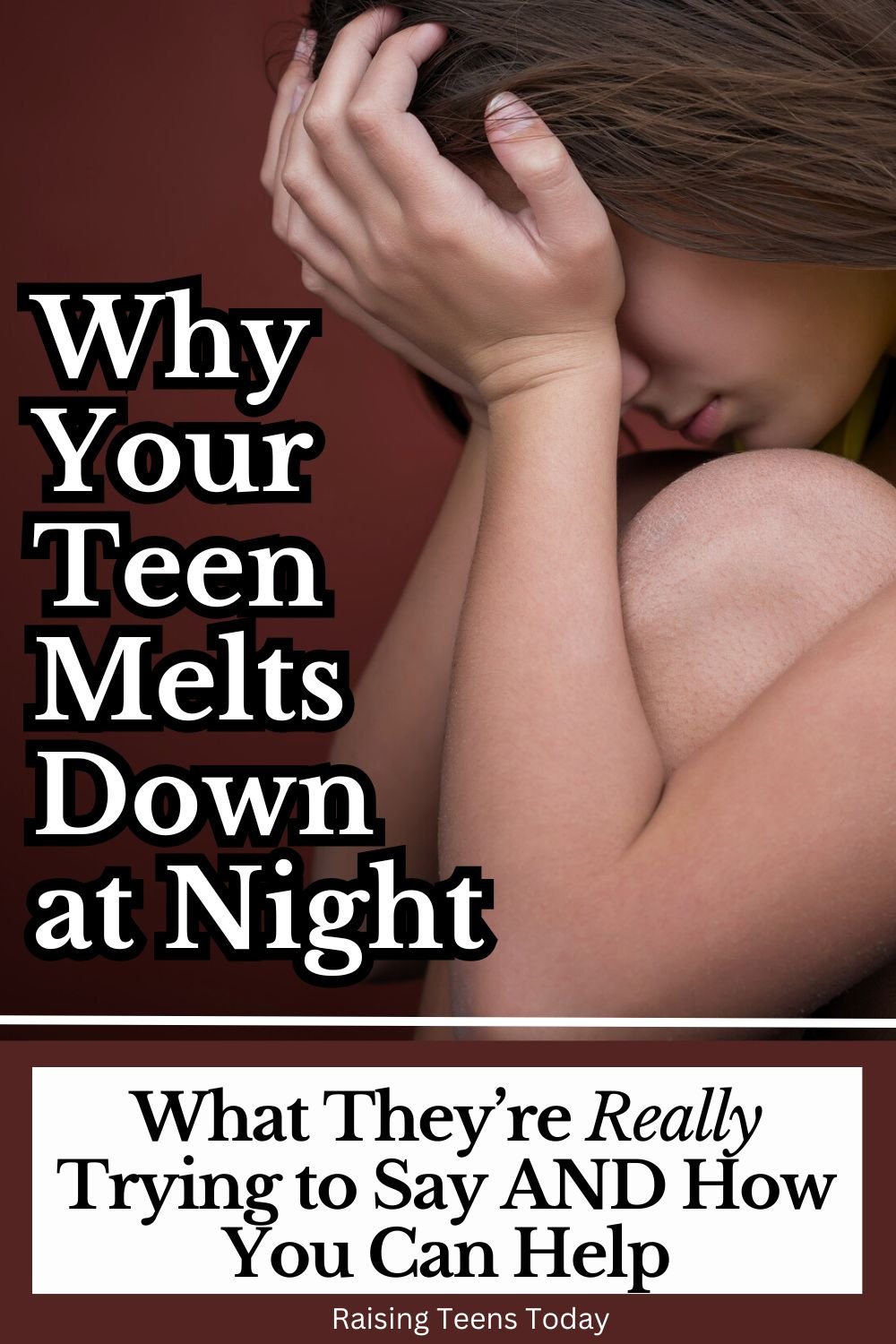
Our teens’ late-night meltdowns can come in many forms… sometimes, they might become argumentative, sassy, or downright rude. Other times, a meltdown might present itself in the form of tears, “Mom… I just can’t keep up anymore,” (with tears streaming down their cheeks), or just sheer venting, “OMG! This week has been so hard.. You won’t believe how much homework I have!” while they collapse on your bed and proceed to pour their heart out to you.
But why does it happen late at night? And what should you do about it (besides wondering why it always happens when you’ve just slipped into your pajamas and you’re ready to climb into bed)? Let’s break down exactly what’s going on and what you should and shouldn’t do when an emotional meltdown happens.
First, Why Does the End of the Day Hit Our Teens So Hard?
1. Long, Exhausting Day of “Emotional Bottling”
You may not realize it, but your teen spends most of their day holding it together. In school with teachers, at sports practices and games with coaches, at after-school clubs, at their after-school job with their boss, and even with friends and classmates.
They’re quite literally “on” for hours at a stretch, and by the time they get home, their emotional, cognitive, and sensory bottle is on overload and beginning to crack. Hence…BOOM! When they’re finally home, they can finally release all their pent-up emotions and fall apart.
2. You (and Home) are Their “Safe Zone”
Home is where your teen can finally let their guard down – and for many teens, Mom is who they trust the most. Whatever thoughts, feelings, or pent-up emotions a teenager has, moms often get the brunt of it.
You’ll get the version of them the world doesn’t see: moody, snarky, overwhelmed, teary, or irritable. Try not to view it as disrespect, but rather a release – (although you should never tolerate continued disrespect). They’re not melting down with you because they don’t love you; they’re melting down because they know you’ll love them anyway.

3. Sleep Deprivation = Emotional Chaos
Let’s be real – most teenagers don’t get enough sleep. They’re pulling late nights studying, up early for school, and packing in a full day. Bottom line, they’re TIRED. Fatigue lowers their ability to manage their emotions and makes even the smallest problems feel way bigger than they are.
4. They Don’t Know How to Say What They’re Feeling
It’s a skill that comes with time, age, and maturity… and our teens simply aren’t there yet.
Hence, instead of your teen saying, “I’m totally stressed out,” or “I can’t keep up,” or “I feel so anxious about this test or that game,” it comes out as irritation, tears, or snapping at you over, well… nothing.
5. Unprocessed Thoughts Catch Up at Night
As parents, we all know this to be true – as the world quiets down, our thoughts tend to kick into overdrive. Well, the same applies to our teens.
Suddenly, they’re lying in bed wondering if they’ll ever get into college, if all their friends secretly hate them, or if they’re ever going to pass Calculus. It’s a lot. And, all those thoughts can spill over to a big-time displaced attitude aimed at you.
How Can You Help Without Getting Dragged into Your Teen’s Emotional Turmoil?
1. Stay Calm (Even if They’re Not)
Your steady composure will help de-escalate the situation. Take a deep breath, lower your voice, and resist the urge to react defensively. Remember: they’re not attacking you, they’re releasing pressure.
2. Don’t Take It Personally
It’s hard, but so important. Meltdowns usually aren’t about you – they’re an emotional dump after a hard day. Instead of reacting, dig deeper. Try to understand the feeling underneath the behavior. Your teen needs you.

3. Offer Comfort First, Logic Later
Now is not the time for a pep talk. A teary teenager at 10 p.m. doesn’t want to hear, “I promise you’ll laugh about this someday.” And you definitely don’t want to start a fight by saying, “Well, you should have started studying for this exam over the weekend when you weren’t so busy!”
An exhausted, overwhelmed teen simply wants a snack and a blanket and to know you’re not going to disown them because they failed their Biology test.
4. Ask Gentle Questions (Not Lectures)
If they open up, keep it light: “That sounds like a lot…Do you want to just vent or would you like a little help figuring this out?” Or, “Want me to sit with you while you talk?” Save those deep life lessons for another time when emotions have cooled down and their brain is fully back online.
5. Create a Soft Landing for Them
Try to make the end of their day feel safe and easy, just like you did when they were toddlers and you had bath and quiet book-reading time. Try creating a routine like serving up a big bowl of popcorn while scrolling through funny TikTok videos. If they know their day will end with a sense of calm, they may feel less likely to unravel dramatically and more willing to process things in real time.
6. Help Your Teen Develop Nighttime Coping Outlets
Your teen doesn’t know what to do with their big emotions late at night. Help them build a small mental health toolkit they can turn to. Ideas include: a playlist of chill music they love, journaling or voice memos to “dump out” their thoughts and worries, or a list of go-to coping strategies like showering, stretching, drawing, or using a deep breathing or meditation app. It’s also helpful to have your teen understand that crying is not a sign of weakness but rather a healthy (and normal!) release of pent-up emotions.
7. Don’t Match Their Energy
If they’re loud, snappy, or emotional, don’t mirror it. Your teen doesn’t need a second meltdown. What they need is your calm, not more chaos.
8. Watch Your Timing
Late at night isn’t a good time for lectures or consequences. Save deeper conversations for the next day when everyone’s more rested and regulated.

9. Don’t Try to Fix it All
It’s tempting to jump in with problem-solving advice or to say something like, “This isn’t a big deal, you’re overreacting.” But our teens don’t need minimizing or us trying to shut them down. They need empathy and someone who says, “I hear you. That sounds overwhelming, and it’s normal to feel frustrated.”
10. Set Boundaries Gently
If their behavior crosses a line (yelling, slamming doors, etc.), it’s okay to set a calm boundary: “I see you’re upset, but we don’t speak to each other like that. I’m happy to talk when you’re calmer.”
11. Remind Them They’re Not Alone
Chances are, your teen feels isolated in their stress. A quick reminder like “You don’t have to carry this by yourself” can ease some of the weight they’re holding.
12. Follow Up the Next Day
Once the storm has passed, check in. Keep it low-pressure: “You seemed pretty overwhelmed last night – want to talk about it?” It shows you care without judgment.
When Should You Worry About Your Teen’s Meltdowns?
Most night-time emotional breakdowns are normal and rather predictable. Their lives are more stressful than we might realize. But if they start happening every night, involve actual panic attacks, self-harm behavior, or deep despair, it’s time to reach out to a mental health professional. You know your teen best. You don’t have to fix this alone, and your teen shouldn’t have to suffer in silence.
Lastly, Remember that Your Presence is More Powerful Than You Know
Teenagers may not always have the words to say it out loud, but when they start to fall apart, they typically just want to know that someone is there, quietly and lovingly holding space for them to break down and then regroup.
Just know, parents, you don’t need to be a superhero every time a meltdown happens. And, you don’t need to have the perfect, wise words for them. You just need to be a soft and comfortable place they can fall into when their world feels overwhelming and confusing.
If you enjoyed reading “Why Your Teen Melts Down at Night (What They’re Really Trying to Say),” here are a few other posts you might like!
How to Create a Coping Toolbox To Help with Your Teen’s Anxiety
