
This Post: Instagram at 13? Here’s Why Many Parents Are Saying “Not Yet”
Written By: Nancy Reynolds
A few years ago, the biggest social media debate among parents was whether their child was old enough for Instagram. Today, many parents are asking a different question:
“Why are we in such a hurry?”
On the surface, Instagram might seem harmless. After all, it’s just photos, videos, friends, celebrities, influencers, and funny memes, right?
But beneath the filters, reels, and perfectly curated posts is something many parents don’t realize… that is, until they see it happening to their own child.
Instagram at 13? Here’s Why Many Parents Are Saying “Not Yet”
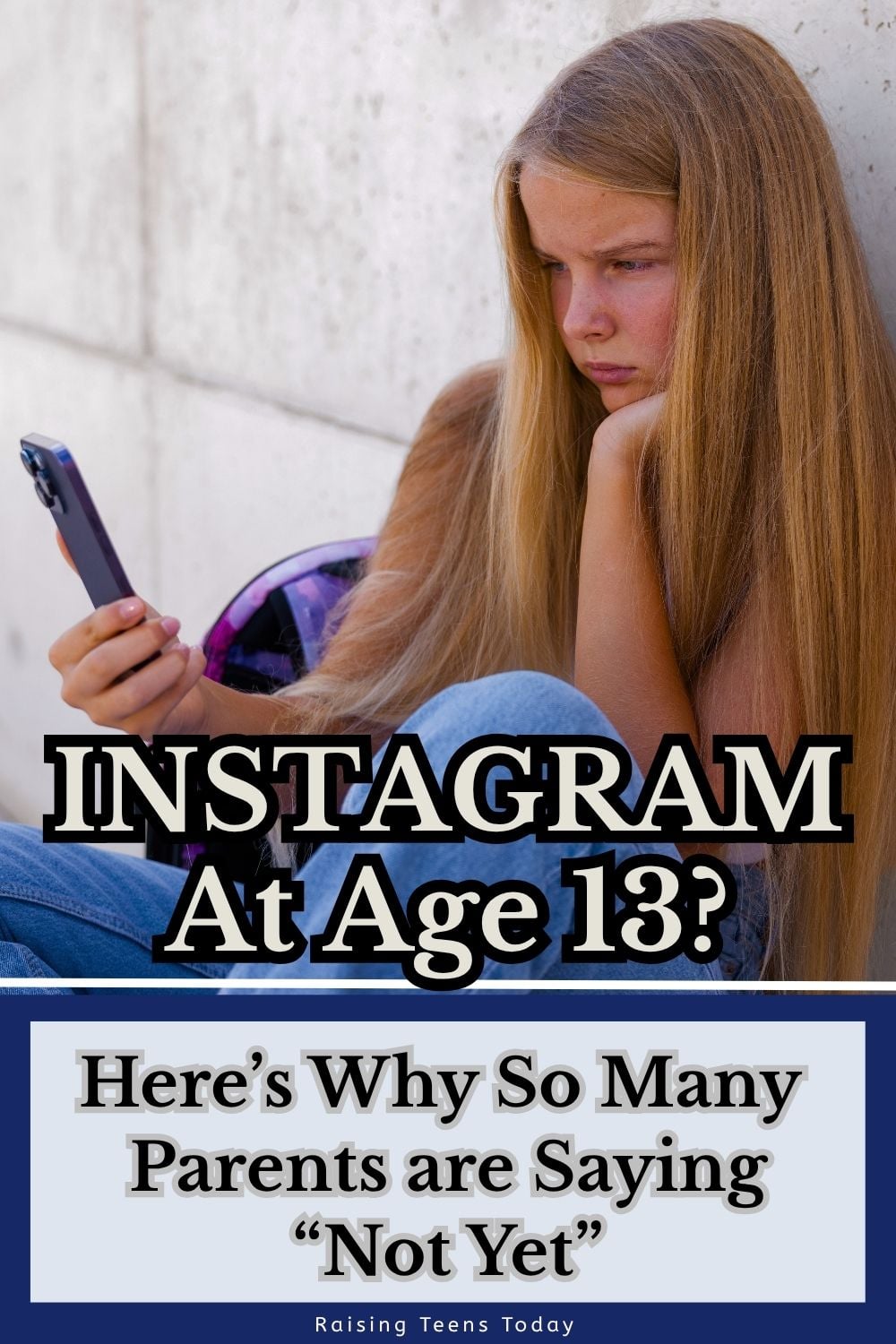
In fact, Instagram has a way of turning a teenager’s attention outward when what they really need during their early teen years is to build a strong sense of who they are on the inside.
That’s why a growing number of parents are choosing to delay allowing their teens to have an Instagram until they’re older – typically around the age of 16.
Not because they’re anti-technology.
Not because they don’t trust their kids.
Not because they’re trying to punish their kids.
But because they’re beginning to understand something important:
The years between 12 and 16 are among the most formative and vulnerable for self-esteem, identity development, body image, and emotional resilience. And, adding a platform like Instagram to their world – one built around likes, followers, appearance, popularity, and comparison can make an already challenging stage of life even harder.
One mom told me recently when it really hit her just how much social media was affecting her 14-year-old daughter’s confidence. It was during a family vacation.
They were standing on a beautiful Florida beach at sunset, surrounded by everything her daughter has always loved – fun, freedom, and an incredible view of the ocean. Instead of enjoying the moment, her daughter spent nearly an hour taking, editing, deleting, and retaking photos of herself. By the end, she was frustrated, practically in tears, and convinced she looked terrible. The heartbreaking part? When her mom looked at the photos later, her daughter looked absolutely beautiful in every single one.
That’s the thing about Instagram.
It can take a perfectly good moment and turn it into a performance. Instead of asking, “Am I having fun?” teens start asking, “How do I look?” “What will everyone think?” and “I need to post something so everyone knows how much fun (it looks like) I’m having.”
Instagram Is Built on Comparison
One of the biggest concerns researchers have about Instagram isn’t necessarily the amount of time teens spend on it. It’s what they’re doing while they’re there.
Instagram is a highly visual platform. So, when teenagers are casually scrolling for hours on end, they aren’t simply communicating with friends. They’re constantly viewing carefully chosen highlights of other people’s lives, appearances, vacations, friendships, achievements, and relationships. And let’s face it, human beings naturally compare – especially vulnerable teenagers who place a high priority on fitting in and whose self-esteem is a work in progress.
In essence, the problem is that teenagers are particularly vulnerable to what many researchers call “the comparison trap” because they’re still figuring out who they are.
When adults see a perfectly edited photo, they can recognize and process the fact that what they’re seeing isn’t real life. For teens, however, the challenge isn’t that they don’t know Instagram is curated. Most do. The challenge is that knowing something is filtered and comparing yourself to it anyway are two very different things.
What research has shown is that during the teen years, when self-esteem and identity are still developing, constant comparison can quietly chip away at teens’ confidence over time, and lower self-esteem and body-esteem among users – particularly young teen girls.
A 2024 study published in Discover Psychology found that viewing Instagram content that encourages comparison influences how users feel about themselves and their appearance, especially among teens and young adults, which can contribute to negative thoughts and behaviors, including eating disorders.
The Self-Esteem Trap
One of the hardest things about Instagram is that it can quietly teach teens to look outward for validation.
How many likes did my photo get?
Who viewed my story?
Why didn’t that person respond?
How many followers do I have compared to everyone else?
As parents, we spend years trying to help our kids develop confidence based on character, values, kindness, effort, and resilience. Instagram, on the other hand, shifts that emphasis and ties our kids’ confidence directly to likes, comments, and peer feedback.
It subtly teaches them to measure their worth using metrics that have very little to do with who they actually are.
Even Instagram’s Parent Company Has Raised Concerns
One of the most eye-opening moments in the social media conversation came when internal company research became public.
According to reports based on Meta’s own internal findings, Instagram researchers concluded that the platform could worsen body image concerns for some teenage girls and intensify social comparison. Internal documents suggested that many teens reported feeling pressure related to appearance, popularity, and social status while using the app.
And, interestingly, research also confirms that even teens themselves feel Instagram is detrimental to their well-being. Internal documents leaked from parent company Meta revealed that a significant percentage of young users, particularly teen girls, directly blame Instagram for their increase in anxiety, depression, and body image issues.
That doesn’t mean every teen will have a negative experience. Plenty of teens scroll Instagram daily with little to no negative outcomes.
But it should certainly make parents pause. Because when the company itself is studying these concerns, it’s worth paying attention.
Should You Wait Until Your Teen is 16?
There isn’t anything magical about turning 16. But there is often a meaningful difference between a 13-year-old and a 16-year-old.
By 16, many teens have developed greater emotional maturity, stronger critical thinking skills, and a more stable sense of identity. They’re often better equipped to recognize unrealistic content, question what they see online, and avoid tying their self-worth to digital feedback.
They still need guidance. They still need limits. But they may be entering Instagram with a stronger foundation than they had at age 13 or 14.
In fact, U.S. Surgeon General Vivek Murthy has publicly stated that age 13 may be too young for social media because of the impact these platforms can have on a child’s developing sense of self and mental well-being.
What to Say When Your Teen Says, “But Everyone Else Has Instagram”
Let’s be honest, if you decide to delay Instagram, your teen probably isn’t going to thank you for it. In fact, there’s a good chance they’ll tell you that you’re the only parent on earth with this rule. They’ll insist all their friends have it. They’ll argue that they’re responsible enough. They may even accuse you of not trusting them. Expect it…
When that happens, try to stay calm and remember: this isn’t really about Instagram. It’s about helping your teen understand that good parenting sometimes means making hard decisions based on what’s best for them, not what’s most popular.
You might say something like:
“I know you want an Instagram, and I understand why. It looks fun, and I know a lot of your friends are on it. This isn’t because I don’t trust you. It’s because I know how much pressure social media can bring, and I want to give you a little more time to build confidence in who you are before adding that pressure to your life.
My job isn’t to do what everyone else is doing. My job is to make the best decision I can for you. And right now, I believe waiting is the right decision.”
Your teen may not agree with you. (Brace yourself… they probably won’t.) But years from now, they won’t remember whether they got Instagram at 13 or 16. What they’ll remember is that they had a parent who was willing to make tough decisions because they cared more about their well-being than about keeping them happy in the moment.
The Goal Isn’t to Protect Them Forever
At some point, most teenagers will use social media. That’s a given. The goal isn’t necessarily to shield them forever. The goal is to give their self-esteem and emotional maturity a running start before introducing a platform that constantly invites comparison.
Here’s the truth, parents… If delaying Instagram until 16 helps your teen spend a few extra years building friendships, confidence, hobbies, interests, and self-worth in the real world, that delay may be one of the greatest gifts you can give them.
Because before they learn how to navigate Instagram, they need to know who they are without it.
