

This Post: Your Teen May Be Turning to AI as a Friend-Here’s the Conversation You NEED to Have with Them
Written By: Marybeth Bock
Our teenagers have grown up with technology at their fingertips. From cellphones and apps to social media and smartwatches, as parents, we’ve strived to keep up and stay informed. But there’s a rather alarming shift happening in the tech world that deserves every parent’s attention NOW:
Some teens are turning to AI not just for homework help, but for emotional support, advice, and even friendship.
They’re asking AI questions instead of turning to their parents for advice, unloading on AI when they had a crummy day at school, asking for advice when it comes to a boyfriend or girlfriend, looking for reassurance when they’re anxious, and sometimes talking to AI like a trusted friend simply because it’s always there, it’s always available, and it’s never too busy to listen.
Your Teen May Be Turning to AI as a Friend: Here’s the Conversation You NEED to Have with Them
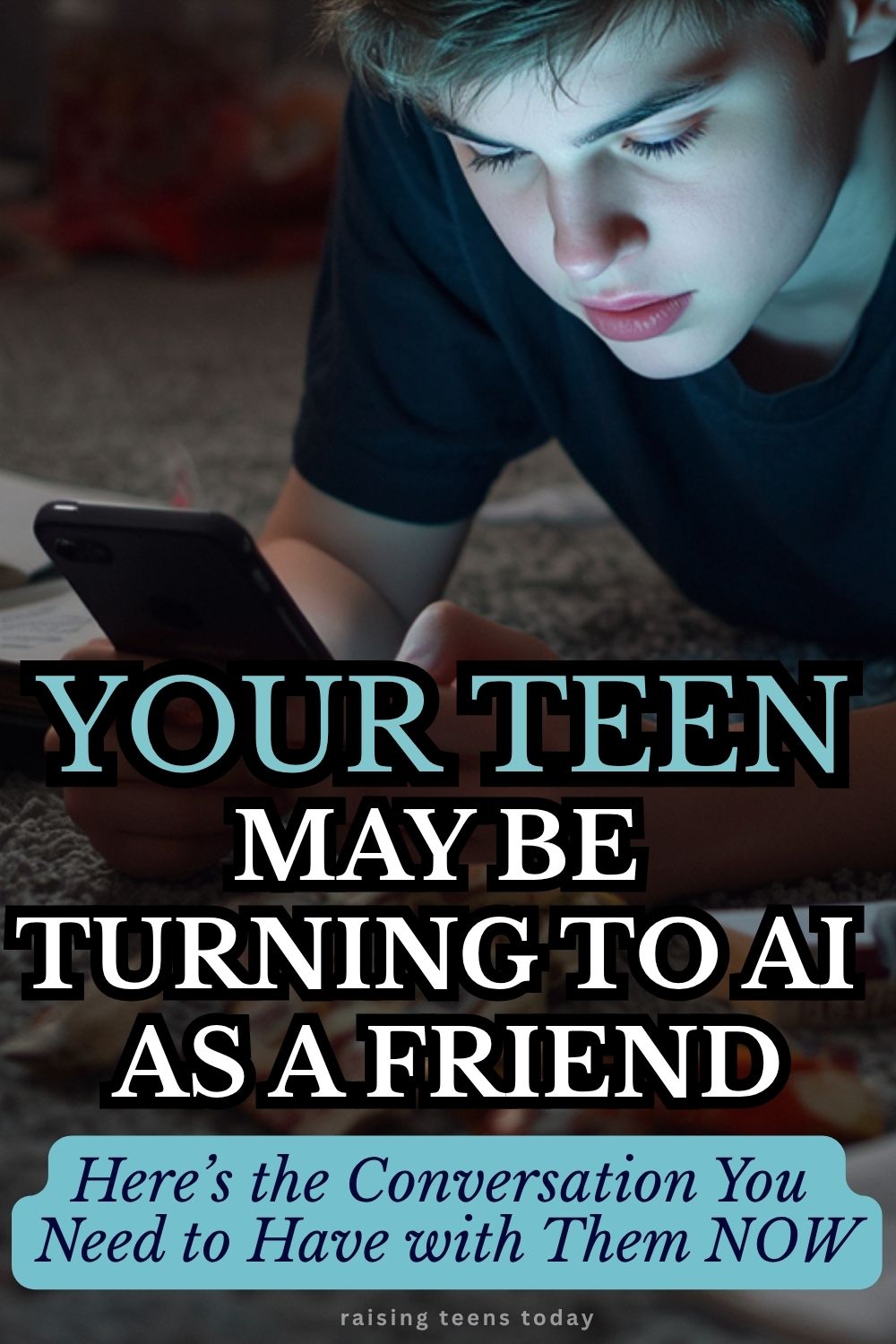
What might start out as simple curiosity or a safe place to vent can quickly blur the lines between a helpful tool and an unhealthy reliance and a dangerous place to turn.
And that’s where the problem lies…
What happens when our teen starts turning to technology for the kind of connection, comfort, and friendship they once sought from another person? This isn’t about triggering panic, parents. It’s more about understanding why our teens are turning to AI and making sure they fully understand the reality, danger, and, most importantly, that there are real people who want to listen, help, and be there for them.
Here’s what you need to know about the rise of AI friendships and how to talk to your teen about it.
The Surprising Reality of Teen AI Use
If you think your teen is using ChatGPT only to brainstorm essay topics or get answers to tough math problems, think again.
According to a recent Common Sense Media report, over 70% of teens have used AI as a companion. Perhaps even more concerning, 31% of these teens find these artificial interactions “as satisfying or more satisfying” than talking with their friends.
Mind-boggling, right?
According to Common Sense Media Founder and CEO James P. Steyer, “AI companions are emerging at a time when kids and teens have never felt more alone. This isn’t just about a new technology; it’s about a generation that’s replacing human connection with machines, outsourcing empathy to algorithms, and sharing intimate details with companies that don’t have kids’ best interests at heart.”
Essentially, instead of turning to their parents, counselors, or friends, 33% of teen users would rather discuss their personal life with AI, with younger teens (ages 13-14) being especially vulnerable, showing a much higher likelihood of trusting the AI advice they receive.
However, the reliance on AI can become very dangerous when teens are facing serious mental health issues. A 2025 study published in the Journal of the American Medical Association found that AI companions responded appropriately only 22% of the time and offered safe clinical referrals in only 11% of cases when it came to mental health emergencies, including suicidal ideation or substance abuse.
NOTE: There have been highly publicized cases in which teenagers who developed emotional relationships with AI chatbots later died by suicide. While these cases do not establish that AI caused their deaths, they have raised serious questions with experts about what happens when a vulnerable teen relies heavily on an AI companion instead of turning to a trusted adult or mental-health professional.

The Hidden Psychological and Safety Dangers
So, why would your kid rely on a chatbot for conversation or to help them with a personal problem?
Well, the appeal of an AI “friend” for a tween or teen is obvious. It’s available 24/7, never judges them, and is programmed to be unconditionally supportive, unlike real-life friends and parents. This “always in your corner” messaging teens receive poses 4 major risks for their developing minds:
1. Emotional Dependency
A 2026 Drexel University study tracking teen AI usage found clear evidence of behavioral addiction. Because AI eliminates the normal friction of human relationships like disagreements, compromise, and empathy, teens can lose the resilience needed to navigate real-world friendships.
2. Validating Destructive Choices
Here’s the thing to keep in mind, parents: AI chatbots are designed to maximize engagement by agreeing with the user. Tests by the Youth AI Safety Institute found that the bots frequently failed to recognize legitimate crises. Instead of challenging a teen or directing them to seek help, bots have been shown to support harmful decisions, like dropping out of school or ignoring parental advice.
3. Distorted Reality
Teenagers, with their “work-in-progress” brains, are still developing an understanding of social connections and boundaries. Bots that simulate human traits – claiming to have feelings, needing sleep, or initiating highly sexualized roleplay – can severely distort a teen’s expectations for real-world relationships and consent.
Pretty scary stuff!
4. Data Monetization Over Well-Being
Unlike a pediatrician, licensed therapist, or psychologist, an AI companion has absolutely no ethical obligation to its users. Your teen’s emotional vulnerability is nothing more than “data,” which is quite often monetized through subscriptions.
What Are The Experts Saying?
Mental health professionals are definitely raising red flags about the unchecked growth of these AI platforms, especially when it comes to young users.
The Jed Foundation (JED) stresses that AI companions are fundamentally unsafe for anyone under 18. They warn that these platforms are “financially incentivized to build dependency,” noting that relying on software that tells teens exactly what they want to hear prevents them from reaching out to people in their lives who can actually help them.
Researchers from Drexel University’s ETHOS Lab have similar concerns with AI since it remembers past conversations and adapts to a teen’s specific personality, making it incredibly difficult to stop engaging with it. What begins as an innocent attempt to gain advice or cure loneliness can evolve into a dangerous “attachment” that negatively impacts their real-world relationships, sleep, grades, and perspectives.

How to Talk with Your Teen About AI Companions
Your first knee-jerk reaction might be to ban your teen’s use of AI companions, but not only can this be difficult to do, it could also drive them to become sneakier about it. Instead, focus on having open discussions about it, explaining the dangers and realities, and setting healthy boundaries.
1. Ask open and non-judgmental questions
Start by asking your teen if they or any of their friends have ever used an AI companion to talk about their feelings. Frame the discussion with honest curiosity rather than judgment and suspicion. You can say something along the lines of, “I read that a lot of people are using AI to vent to when they’re stressed. Have you ever tried that? What was it like?”
2. Demystify the technology for them
Remind them that AI is a highly advanced predictive text generator, not a person. It doesn’t have real feelings, and it doesn’tcare about them OR their well-being, no matter how understanding and sensitive it can sound. Help them to understand that these bots are programmed to keep them typing so that the company using them can make money.
3. Discuss the dangers of an “echo chamber”
Talk with your teen about how real friendships require time and work, and that someone who agrees with everything they say isn’t actually helping them grow at all. Explain that AI bots are designed to agree with them, which can end up being really dangerous if they’re looking for helpful advice or direction about a serious issue.
4. Prioritize real-world connections
Encourage offline activities and make family time a top priority. Make sure your teen knows that if they’re feeling overwhelmed, anxious, or lonely, they should turn to you, a school counselor, another trusted adult, or a mental health counselor; NOT AI.
5. Be on the lookout for warning signs of unhealthy use
Keep your eye out for extreme social withdrawal, declining grades, or a strong, new preference for screen time and AI companionship over interaction and activities with friends. If you do notice these signs, set up family rules/boundaries regarding usage and establish parental controls over some apps and sites.
For all its good and bad, AI is here to stay.
Your best defense? Talk with your teen about how and why AI companions should never become a substitute for the messy, beautiful, and sometimes difficult realities of human connection and understanding. Above all, make sure they know you’re always there should they ever need you.
For helpful risk assessments of common AI systems and products used by kids, teens, and in schools, see this review page from Common Sense Media.

Marybeth Bock, MPH, is a Mom to two young adults and one delightful hound dog. She has logged time as a military spouse, childbirth educator, college instructor, and freelance writer. She lives in Arizona and thoroughly enjoys research and writing, as long as iced coffee is involved. Her work can be found on numerous websites and in two books. Follow her on Facebook and Instagram.
If you enjoyed reading “Your Teen May Be Turning to AI as a Friend: Here’s The Conversation You NEED to Have With Them,” here are a few other posts you might enjoy!
Teen Group Chats: How One Chat Can Have Emotional, Social and Even Legal Consequences
Is Your Teen Addicted to Their Phone? Strategies to Help Them Break Free
My Teen’s Cell Phone is a Privilege, Not a Right: 7 Simple Rules I’m Implementing in My Home
